

For years, I didn't stop.
I ran a dance studio. I raised kids. I taught classes, managed a team, and handled the business side, then went home, had dinner with my family, and stayed up late catching up on emails, schedules, and laundry. I’d lie in bed trying to slow down a spinning mind long enough to get a few hours of sleep. Then I’d wake up and do it all again.
I didn’t question it back then. That was just what running a studio looked like. Or so I thought.
It caught up with me in my health first. Then the joy started to dim. I wasn’t falling apart in any obvious way. I was just worn thin. Irritable for no clear reason. Overwhelmed by small things. Short with the people I loved most.
If that sounds familiar, you’re in good company. Most studio owners I talk to are running on too little, for too long.
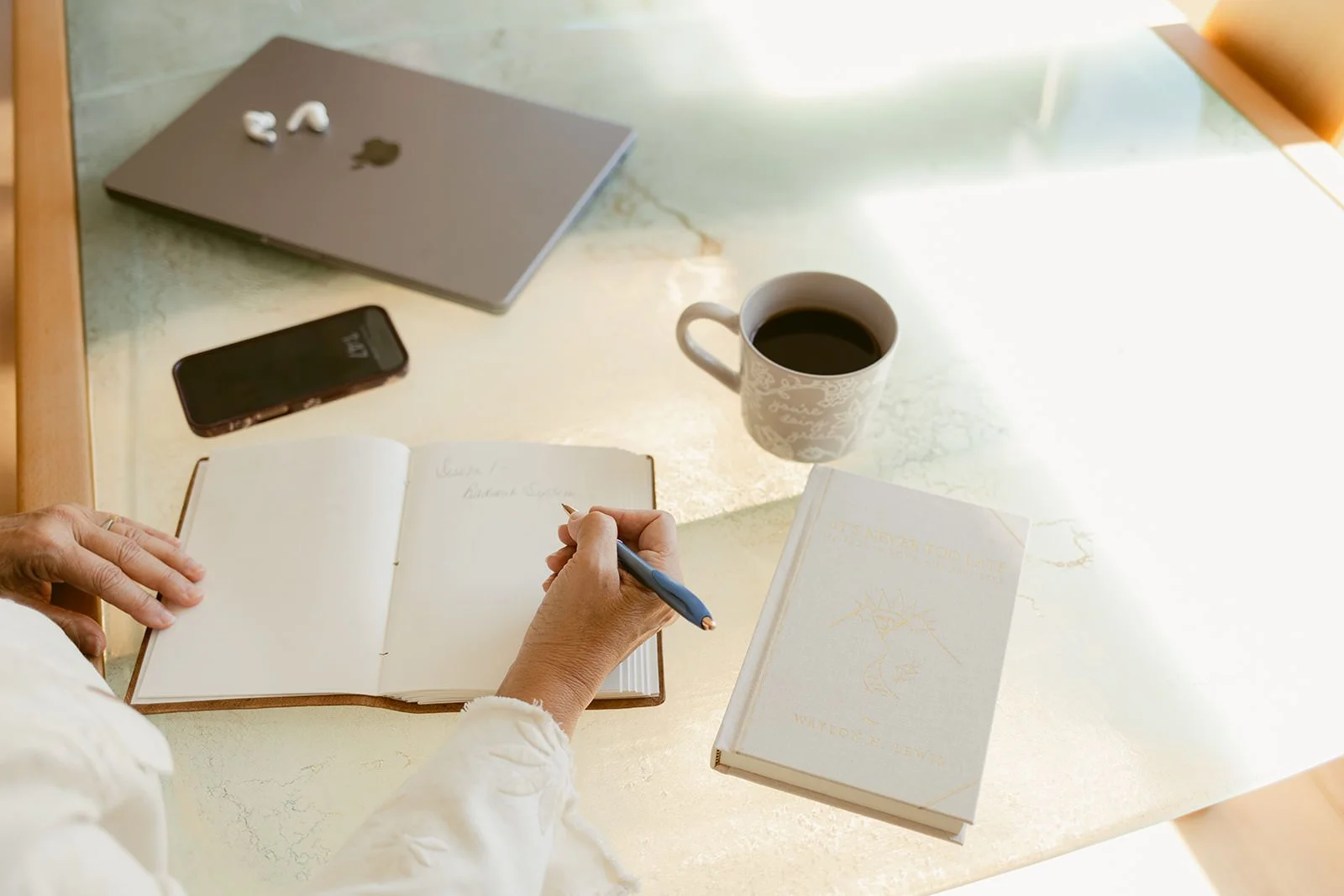
What building businesses taught me
I’ve built a lot of businesses since the studio. The photography business across two states, the yoga teaching, and now my coaching practice. With each one, I got a little wiser about when to go hard and when to pull back, and about building in recovery on purpose before I crashed into it.
That didn’t come naturally. It came from the times I pushed too long and paid for it, and from watching clients do the same thing and recognizing myself in their stories. Slowly, and a little reluctantly, I learned that the version of me who thought rest came after the work was done had a lot to learn.
The work is never done. So rest has to be built in, the same way you build in payroll and class schedules.
And I’m still learning.
The multitasking myth
A few months ago, while I was writing my book, I came across a study from the University of California, Irvine. Researchers found that after an interruption, it takes an average of about 23 minutes to fully get your focus back. link to source
Twenty-three minutes. Every single time.
The American Psychological Association has looked at what we call multitasking too. The brain doesn’t actually do two things at once. It switches back and forth between tasks, and every switch costs you. All that switching can eat up as much as 40 percent of your productive time. link to source
When I read that, I thought about every writing session at my desk. Type a few sentences. An email comes in. Stop and answer it. Try to remember where I was. Start again. The phone rings. A calendar reminder pops up. Oh, and Bill has a question. By the time I’d pieced together an hour of writing, I didn’t have much to show for it, and I felt scattered and frustrated.
Now picture that in a studio. You sit down to work on next season’s schedule, and a parent stops by the front desk. A teacher texts that she’s running late. Someone messages asking about a trial class. You answer between classes, standing in the hallway, and by Sunday night you’re still trying to finish the schedule you started on Tuesday.
We wear juggling like a badge of honor. “I’m great at handling a lot at once.” And maybe we are. But constant juggling is exhausting, and according to the research, it makes us far less effective than we think we are.
What I did instead
That research finally convinced me to close my office door, turn off notifications, and work in single-focus blocks of twenty-five minutes. One thing at a time. Nothing else allowed.
It felt uncomfortable at first. Like I was ignoring something important. Like something would fall apart if I wasn’t available for twenty-five whole minutes.
Nothing fell apart.
I made real progress, and I didn’t feel stressed or frustrated at the end of it. I could take an actual lunch break, chat with Bill, check my emails, and go back to work in the afternoon feeling refreshed.
At the studio, this might look like one focused block before the doors open, with your phone in another room. Or asking your front desk to hold messages for thirty minutes while you finish the newsletter. Or setting specific times to answer emails instead of answering every one the moment it lands.
If you’ve never tried single-focus work, give it a real shot before you decide it won’t work for you. Start with twenty-five minutes. Close what you can close, silence what you can silence, and see what happens. I think you’ll surprise yourself.
The weight nobody sees
The task switching is only part of it.
Most studio owners carry an enormous amount in their heads at any given time. The planning, the anticipating, the remembering. Which teacher needs a sub next week, which costumes still need to be ordered, which student hasn’t been in lately, and what was that thing you promised to follow up on? And then there’s home. What’s for dinner, who has a doctor’s appointment, whose birthday is coming up.
That mental weight doesn’t clock out when you sit down to focus. It runs underneath everything, all day long.
For parents, especially moms, it’s even heavier. Research from the University of Bath and the University of Melbourne, published in the Journal of Marriage and Family, found that mothers handle about 71 percent of what researchers call cognitive household labor, the thinking work of keeping a household running link to source. That’s before anyone opens a laptop or walks into a studio.
If your brain feels like it never fully turns off, that’s a big part of why. You’re carrying a lot, and most of it is invisible.
So what do you do with it?
Start by looking at your days differently. What actually needs to happen today, and what could wait? What could be grouped together instead of scattered across every hour? What are you holding in your head that just needs to be written down somewhere so your brain can let go of it?
In my coaching and in my book, I use a simple question for everything on the schedule and the to-do list. Do I keep it, keep it but change it, let it go, hand it off, or save it for later? Not everything deserves a spot on this week’s list. Some things can wait. Some things can go entirely.
The push and the rest

A few weeks before Bill and I left for Malta and Mallorca, I pushed hard. Long days, early mornings, the kind of focused stretch where everything else waits. I had promised myself I’d get my book to the editor before we got on that plane.
I did it. And then we left.
And I let it go completely.
I didn’t work on the trip. Not even a little. I sat in the sun. I looked at the water. I had long dinners and let my mind wander wherever it wanted. Back in my studio days, that would have seemed almost impossible.
That version of me believed rest was what happened when you got sick and had no choice. She thought stopping meant falling behind. She checked her phone constantly, just in case. She measured her worth by how much she got done.
She was exhausted all the time and wondered why.
What I know now is that the push only works when the rest is real. A real vacation. A real day off. A real evening that doesn’t end with answering emails at midnight. The quality of your work is directly connected to the quality of your rest. That’s just how it works.
It doesn’t have to be a trip overseas
Not everyone has a trip to Malta on the calendar, and that’s okay.
Rest can be a real lunch break away from the front desk. An afternoon at the beach. A walk without your phone. Closing the laptop at a reasonable hour and being done for the day. A Saturday morning that belongs to you instead of your to-do list.
Those things count. Over a regular week, they add up in ways that matter more than we give them credit for.
Everything is never finished, so you can’t wait until it is to rest. Rest has to be chosen. Planned for. Protected.
The push works when the rest is real. Even when the rest is just Tuesday afternoon.
A few things to try this week
If you’re not sure where to start, try one of these.
Do one twenty-five minute block of single-focus work. Door closed, phone face down, notifications off. Just that one thing. See how it feels.
Look at your schedule and find one thing that doesn’t need to be there this week. Move it, delete it, or hand it off.
Write down everything you’re carrying in your head that you won’t get to today. Get it out of your brain and onto paper, decide when you’ll deal with it, and let it go for now.
And find your Tuesday afternoon, whatever that looks like for you. Then take it.
If you’d like help building a studio that gives you room to rest, with systems and a team that keep things running while you’re away, I’d love to talk. Book a free consultation.
